Southeast Asia Travel Narrative Story: The Life-giving Lake
Story and photography by Ray Waddington.
Click/tap an image to begin a captioned slideshow (best viewed on a modern, wide-gamut display) and stock licensing details.
People have been living in central Cambodia for thousands of years. One reason is because it is home to the largest freshwater lake in Southeast Asia — Boeng Tonle Sap. The region also supports a huge diversity of non-human species. So many in fact, that in 1997 UNESCO declared it a Biosphere Reserve.
The lake's status as a tourism destination came about relatively recently. Although it lies within easy reach of Siem Reap, most tourists flock to that city instead to visit the more popular ancient temple complex at Angkor.
It is possible to visit the temples and the lake on the same day. That itinerary, though, would make for a tiring, whirlwind trip. Better, then, to take the tours on separate days.
Nobody has lived at the temple complex for hundreds of years. But visiting the communities around the lake, you may meet someone descended from the people that helped to build those temples.
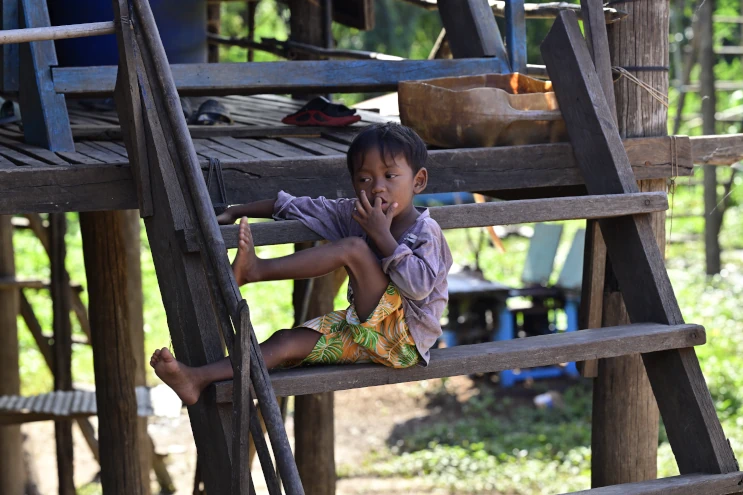
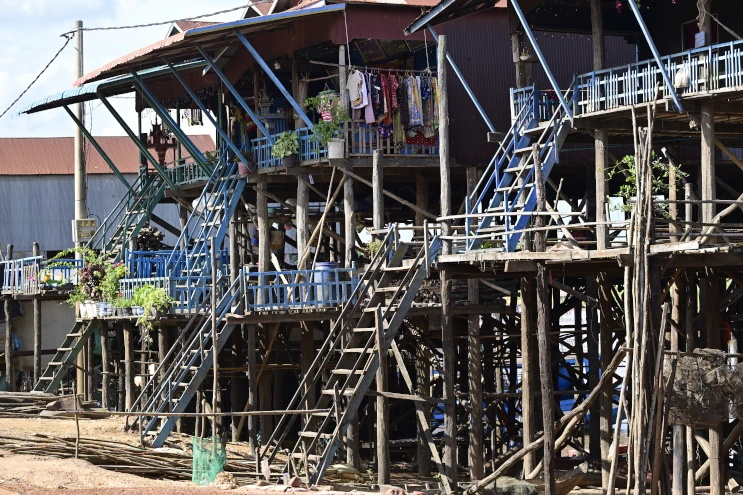
A journey of up to an hour from Siem Reap (depending on mode of transport and time of year) brings you to Kampong Phluk (Harbor of the Tusks in English). Marketed as a floating village by tour companies, it is neither floating nor a village. Instead, is a community of three villages on the banks of the Tonle Sap River (Tnaot Khombut, Deikrahm and Khok Khdul) with houses raised on wooden stilts. These villages are home to around a thousand families of mainly Khmer ethnicity.
The main source of income for these families (and for the other communities in the area) is fishing. But most of their fishing takes place during the rainy season (approximately July to November). Their other sources of income include farming (particularly rice), raising livestock and tourism.
Aside from the tourism, this is the same lifestyle that supported the population at Angkor all those centuries ago. And it was successful for a few centuries: Angkor is believed to be one of the largest settlements by population size in the entire ancient world.
One reason for that success is a unique feature of the Tonle Sap River that is found nowhere else in the world. The monsoon season here typically brings around four meters of precipitation. Although the river meets the Mekong some 150 kilometers to the southeast, the Mekong's water volume becomes so high at this time of year that it overflows and reverses the direction of the flow of the Tonle Sap River. Combined with the rainfall and the rising levels of its tributaries, the level of the lake can rise as much as ten meters.
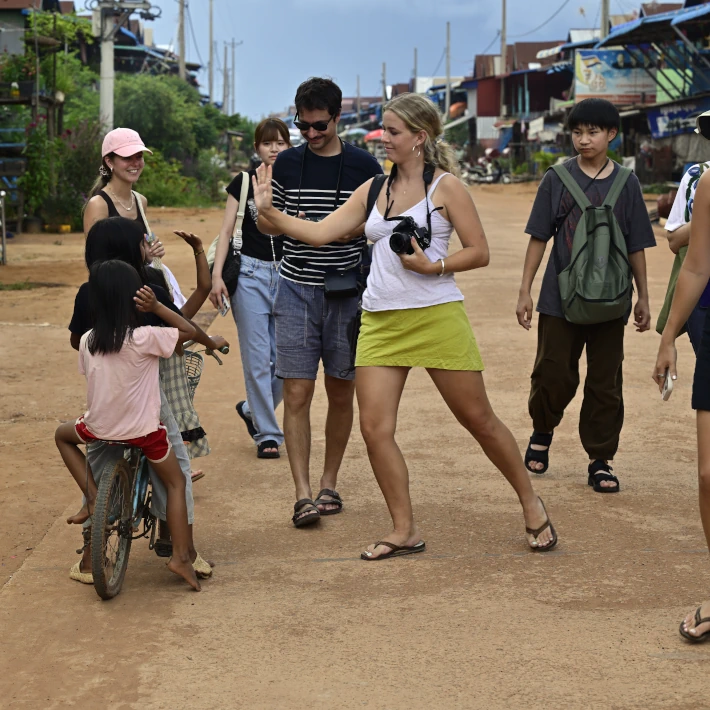
Walking around the villages of Kampong Phluk is the best way to get a feel for daily life here. By now the locals are used to interacting with visitors. When they're not in school, the children are especially friendly — even though many of them will try to get you to buy souvenirs.
Your experience in the villages will vary depending on the time of year. Until the middle of the rainy season, you'll be able to walk along the roads. Then, for the next few months, the road disappears under a deluge of water. Bikes and motorbikes are swapped for small boats as people paddle around going about their daily business.
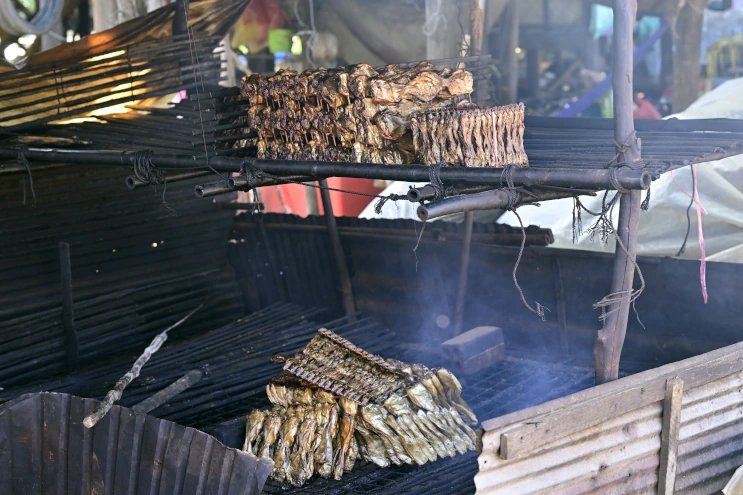
There is debate about the best time of year and day to visit. Ideally, two visits (one in the dry season and one in the rainy season) at different times of day give the best option. Failing that, the beginning of the rainy season on a weekend afternoon is the best recommendation. The fishing season has already started and village activities such as smoking the catch can be observed.
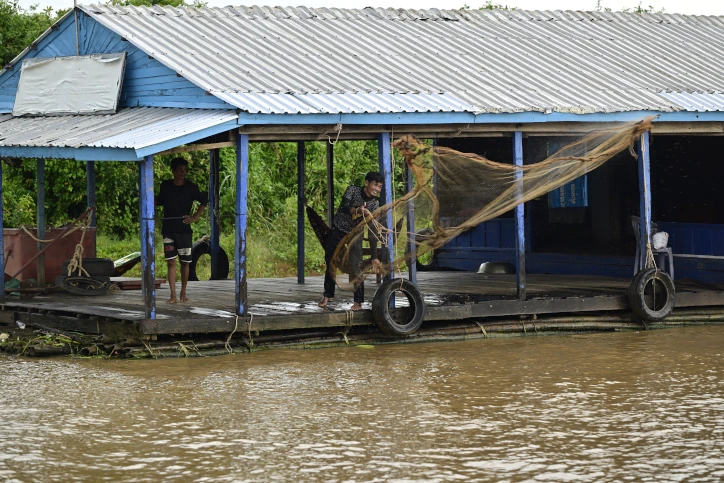
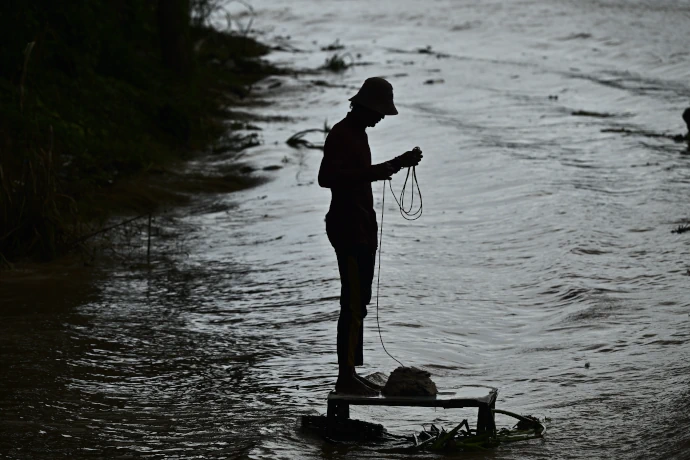
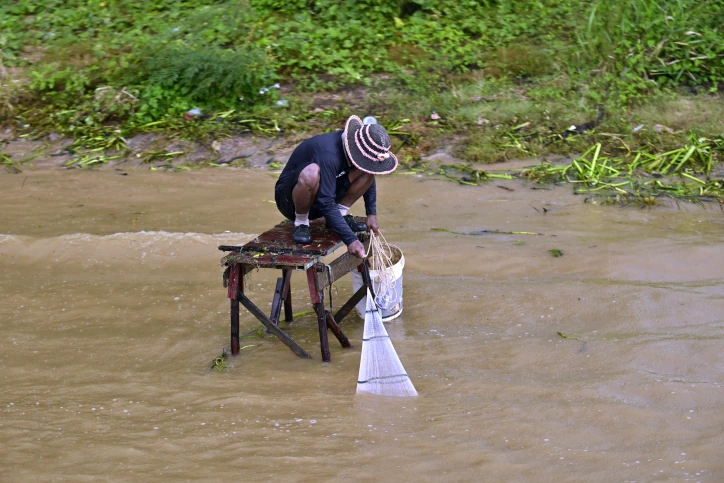
It's another few kilometers from Kampong Phluk to the lake. That journey is made by boat all year round. All day long during the rainy season you'll see local fishermen plying their trade. Some are in small boats, some cast nets and some stand on platforms in the river itself.
You'll also see how the local people are adapting to tourism. Around half way to the lake your boat will dock at a floating restaurant. They sell souvenirs as well as food and drinks. But the main reason for stopping is a side trip with one of the women who wait patiently to take tourists on a thirty-minute boat ride through the mangrove swamp.
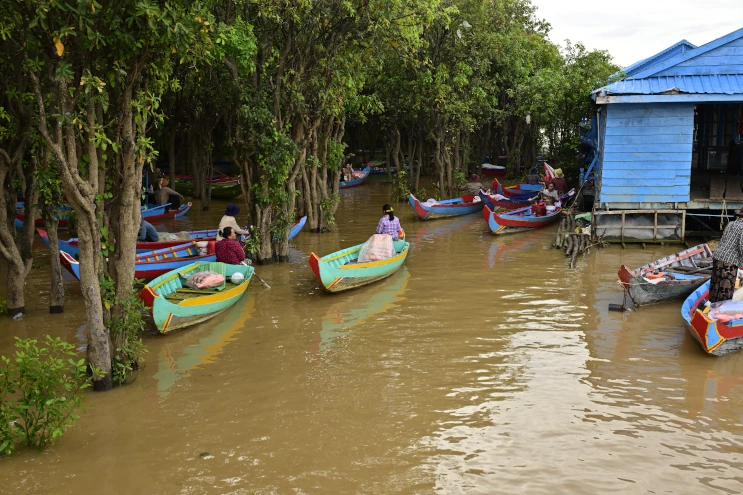
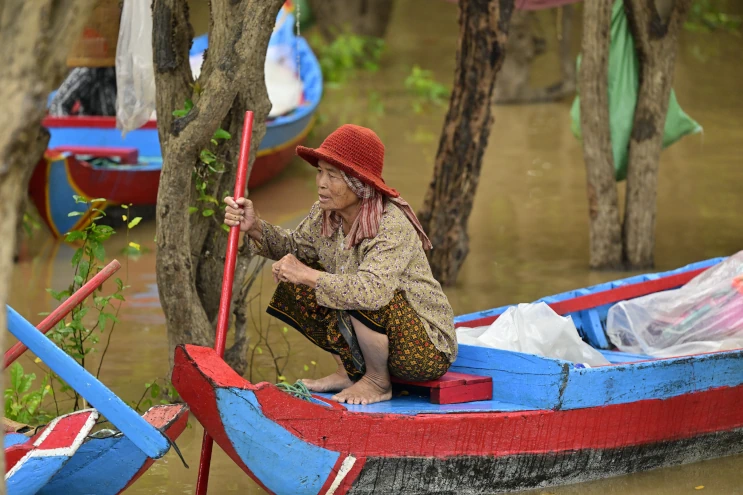
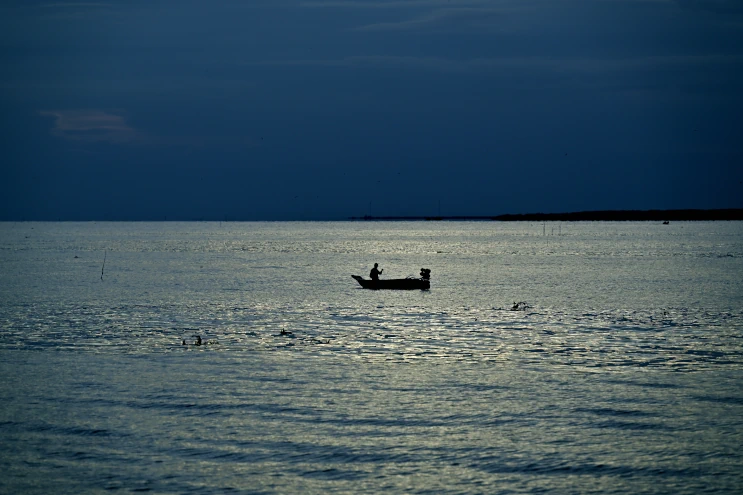
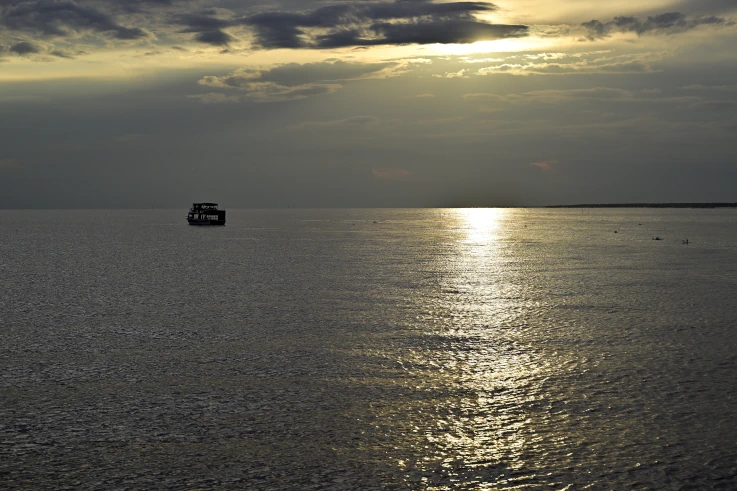
The final part of the tour takes you onto Boeng Tonle Sap. If the timing is right, you'll arrive just before sunset. Here, you'll also see people out on the lake fishing. As you wait for the perfect photo opportunity, the atmosphere is eerily calm and serene. Once the sun has set, it's about an hour back to Siem Reap.
Photography copyright © 1999 -
2026,
Ray Waddington. All rights reserved.
Text copyright © 1999 -
2026,
The Peoples of the World Foundation. All rights reserved.
Waddington, R., (2026) The Life-giving Lake. The Peoples of the World Foundation. Retrieved
September 2, 2026,
from The Peoples of the World Foundation.
<https://www.peoplesoftheworld.org/travelStory.jsp?travelStory=life-giving%20lake>
If you enjoyed reading this travel story, please consider buying us a coffee to help us cover the cost of hosting our website. Please click on the link or scan the QR code. Thanks!



© The Peoples of the World Foundation and individual contributors, 1999 - 2026. All rights reserved.
We support Internet privacy. Our website does not track visitors.