Opinion Editorial December, 2025: Indigenous Girl of the Year

opinion editorial
Any opinions expressed do not necessarily represent the policies of The Peoples of the World Foundation. Unless otherwise noted, the author and photographer is Dr. Ray Waddington.

Stock licensing available.

If you blinked in the past eleven months you may have missed something: 2025 is officially the Year of the Indigenous Woman in Mexico. While this is being recognized by a recently-opened exhibition at the Instituto Cervantes in Madrid, the Spanish government said it was sorry about that country's past treatment of Mexico's indigenous people during colonization.

Still, that did not prevent a man from sexually assaulting Mexican president, Claudia Sheinbaum last month. Although he was drunk at the time, we should not consider that an excuse or a justification. Moreover, if that can happen in public in 2025 to the country's most powerful non-indigenous woman, we can be sure that the legacy of Spain's mistreatment of Mexico's indigenous women remains strong.

We can look at some other news from last month to confirm that Mexico is not an isolated case. A year after the fall of the Assad regime in Syria, exiled Bedouins from the far south of the country are still being prevented from returning despite earlier promises. In the west of the country, the plight of the Alawite community remains equally dire. No wonder Pope Leo criticized religious violence last month.

In Slovenia, a new law came into effect last month that effectively treats the entire indigenous Roma community as a threat to national security. For Nigeria's indigenous primary school children, last month saw their chances of being kidnapped rise above their chances of being taught in their own language. Iran will this month execute indigenous Baluch woman Goli Kouhkan unless she is able to raise an impossibly high sum of money. Her crime was being a survivor of an abusive child marriage in that country. Married at age 12, it is not clear she had any involvement in her husband's killing. Yet his family will not pardon her unless she finds the money and pays it to them as compensation.

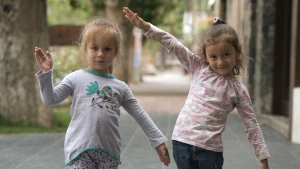
Amid such circumstances comes the further loss of Indigenous Knowledge (IK). Perhaps the time has come to launch an online encyclopedia of IK. We could call it 'Indigenipedia' and it could be started by my "Indigenous Girl of the Year" for 2025. An indigenous Cocama girl from a small Amazon Jungle community in Peru, she already demonstrated her knowledge of finding wild berries to eat when I took this photo.

I thought about her last month when I watched the excellent, recent documentary/drama film, Lost in the Jungle. It tells the survival knowledge story of Lesly Mucutuy. She is a young, indigenous Huitoto girl from Colombia. She could write the entire jungle survival content of 'Indigenipedia' on her own.

'Indigenipedia' should never use Artificial Intelligence to create its content. We saw last month what that approach leads to when researchers started publishing their findings on the recently-launched Grokipedia. In any case, since much IK is still not even documented — let alone digitized — there is a dearth of material on which AI systems could even be trained. In his excellent essay "Holes in the web" (republished by The Guardian last month), Deepak Varuvel Dennison makes the case that AI is itself now a threat to IK. No wonder Pope Leo told students not to have AI do their homework last month. No wonder that some AI company stocks fell faster last month than a Russian humanoid AI robot.

If you enjoyed reading this month's opinion editorial, please consider supporting independent, advertising-free journalism by buying us a coffee to help us cover the cost of hosting our web site. Please click on the link or scan the QR code. Thanks!

Buy us a coffee

Buy us a coffee QR

Stock licensing on Alamy. Subscribe to our Youtube channel.

© The Peoples of the World Foundation and individual contributors, 1999 - 2025. All rights reserved.

We support Internet privacy. Our website does not track visitors.